
The Jungle: map and wave structure
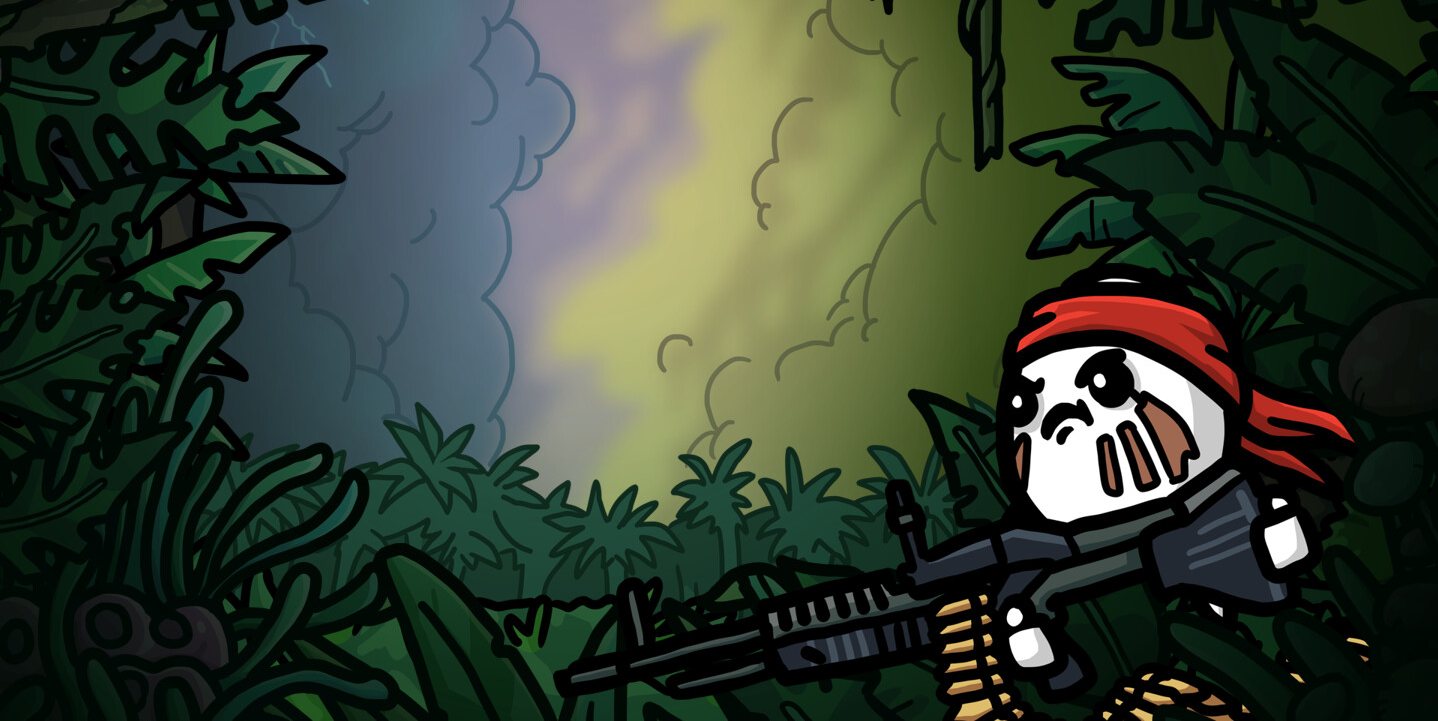
Primal Dread's map is the Jungle: a prehistoric forest with 20 waves, new enemies, elites and bosses. Packs charge out of the undergrowth, some dinosaurs fly, and holes in the ground are a new environmental hazard.
The Jungle is Primal Dread's arena, and the developers were clear about why it exists: Abyssal Terrors was about diving into an alien ocean, so the follow-up had to be the opposite. The launch post puts it as "what's better than giant evil fish? And then someone said the word dinosaur."
The result is a prehistoric forest with a different silhouette from the Crash Zone: dense foliage at the edges, burrows and dirt mounds in the floor, and enemies that arrive as packs rather than as a trickle.
Twenty waves, structured like a run
The DLC adds a new map with 20 waves of new enemies, elites and bosses. That is the same run length as the base game, which is the right call: Brotato's pacing is built around a twenty-wave arc, and a shorter or longer map would need its own balance pass.
What changes is what fills those waves. The official content list says "new enemies, elites and bosses", and the announcement adds that the Jungle has "a very different look from Crash Zone and Abyss". The screenshots back that up: where the Crash Zone is dry and open, the Jungle is wet, green and cluttered.
| Wave band | What to expect | What it asks of you |
|---|---|---|
| 1 to 5 | Charging packs, learning the arena | Movement discipline; do not commit a path yet |
| 6 to 10 | Mix of melee packs and ranged threats | Decide Mecha or Mutation and start collecting |
| 11 to 15 | Hazards stack: oil or acid, plus holes | Positioning; fights get decided by floor space |
| 16 to 19 | Denser spawns, elites in the mix | Kill order, and knowing when to give up ground |
| 20 | The run's boss | Single-target damage and patience |
That table is a structure, not a leak: the specific spawns are the game's business, and the DLC does not publish a wave table. What it does publish is the shape, and the shape is standard Brotato with a nastier floor.
Three hazards
Three environmental problems define the Jungle, and two of them come from Evolution rather than the map.
Holes. The launch post calls them "the dreaded holes" and describes them as a new environmental hazard, introduced alongside flying dinosaurs because a hazard you can fall into needs enemies that can cross it. A hole is not damage, it is denied ground: it removes the option of walking in a straight line, which in a game about kiting is the most expensive thing you can lose.
Oil puddles. Mecha dinosaurs leave oil that slows you. Slow plus a charging pack is the Jungle's standard death, and it is avoidable by fighting on clean ground.
Acid. Mutant dinosaurs spread acid. Unlike oil, acid is not just a slow; it is persistent area denial, and it lands where the enemies are, which is where you want them.
The three interact. An oil puddle next to a hole is a corridor you cannot use. An acid pool on the only clean lane turns a wave into a fight in a phone booth. This is why the map page and the Evolution pages link to each other: in the Jungle, the floor is a mechanic.
Arena layout, from the screenshots
The official screenshots show a consistent arena grammar:
- Foliage borders. Dense dark green at the edges, which frames the play space and hides spawn points.
- Dirt mounds and burrows. Circular pits that enemies emerge from, sometimes with a visible marker before the spawn.
- Scattered props. Rocks, palms, small plants and ruined foundations that block movement without blocking projectiles.
- Glowing pickups. Gems, health crosses, and the DLC's two Evolution drops, which are visually distinct: mecha parts versus green mutagen flasks.
That last point is worth stating plainly, because it is the single most useful thing to learn in your first run: if you cannot tell a mecha part from a mutagen at a glance, you cannot choose a path deliberately. Both are on the floor, both are small, and one of them commits you.
Playing the map rather than the enemies
Three habits that work specifically on this arena.
Fight in the middle, not the edge. Foliage hides spawns, and the edge is where packs appear with the least warning. The centre is boring, and boring is survivable.
Keep a clean lane. Before a wave starts, identify one route with no holes, no oil and no acid. When the wave goes wrong, that lane is your exit. If it does not exist, make one by killing the enemies that are creating the hazard.
Do not chase. The Jungle's packs move in bursts. Chasing a straggler across a hazard field is how runs end at wave 13 with a full build.
No official map exists
No wave-by-wave enemy table, no boss name list, and no official map. The DLC does not publish those, and this site does not invent them. If you want the creature list that is documented, including the Brachiosaurus and the baby Trex, the bosses and elites page has it. If you want the counterplay for oil and acid specifically, the Mecha and Mutation pages cover each hazard in detail.
Checked 2026-11-04 against the 1.2.0.1 build.